
The Origin Story: Where Baklava Comes From
Think of this article as two guides in one: (1) a clear, respectful origin narrative you can use in merchandising and sales conversations, and (2) a sourcing checklist that protects you from “pretty photos, disappointing deliveries.”
Key takeaways (for buyers and brand owners)
- Baklava’s exact origin is debated across a broad region, but the layered, standardized form most people recognize was strongly refined and popularized through Ottoman-era culinary culture.
- Origin narratives influence price: “Gaziantep pistachio,” “clarified butter aroma,” “thin-layer craftsmanship,” and “gift-grade presentation” are the levers that premium buyers actually pay for.
- Authenticity is measurable: crispness retention, syrup balance, pistachio quality, layer integrity, and packaging performance can be tested—before you scale orders.
- Export success is process: moisture control, crush prevention, labeling discipline, and batch documentation matter as much as craftsmanship.
On this page
- What baklava is (and what it’s not)
- Why origin matters in export & branding
- A simple timeline: how baklava became “baklava”
- Ottoman refinement: palace kitchens, craft, and ceremonies
- Regional styles inside Türkiye (and what buyers expect)
- Gaziantep (Antep) and geographical indication (PGI)
- Quality markers importers can verify
- Export handling: packaging, storage, and shipping realities
- Buyer checklist: questions to ask before your first PO
- FAQ (practical + commercial)
What baklava is (and what it’s not)
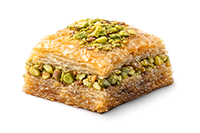
Baklava is a layered pastry built on a few fundamentals: very thin sheets (yufka/filo-style), a fat with aroma and structure (traditionally clarified butter), nuts (often pistachio or walnut), and syrup that is absorbed in a controlled way.
In premium baklava, the goal isn’t simply “sweet.” The goal is a clean, layered bite: crisp top, delicate interior, and a finish that smells like butter and nuts—not burnt sugar, not stale oil, not soggy pastry.
A buyer-friendly definition of premium baklava
- Layer integrity: thin sheets that stay distinct (no heavy “bread-like” interior).
- Syrup balance: glossy, absorbed, not pooling; sweet, not cloying; moist, not wet.
- Nut clarity: fresh aroma and color; no bitterness; no dusty aftertaste.
- Fat aroma: buttery, clean finish; no waxy texture; no rancid notes.
- Presentation: consistent cuts, intact corners, minimal crumble, clean tray.
Why origin matters in export & branding
“Where it comes from” is not only a cultural story—it’s a commercial filter. In many markets, customers don’t have vocabulary for syrup density or pistachio grade. But they understand origin signals: Gaziantep pistachio, Ottoman heritage, hand-layered craft, gift-worthy.
For importers, origin claims have three direct impacts:
- Positioning: premium gift, café/hospitality, retail staple, or private label value.
- Specification: pistachio percentage and grade, butter type, layer count range, and syrup target.
- Compliance: labeling language, allergen declarations, production/expiry format, and (where used) geographical indication rules.
A simple rule for exporters
The more premium your positioning, the more your product must “behave like the story” after shipping: crispness, aroma, color, and presentation must arrive intact. Otherwise the story backfires.
A simple timeline: how baklava became “baklava”
Baklava’s “origin” is often discussed as a single point in time, but it’s better understood as an evolution: layered pastries existed across a wide geography; then a recognizable, standardized baklava style emerged and spread.
Timeline (high-level, buyer-friendly)
- Early layered pastry traditions: Across the Eastern Mediterranean, Mesopotamia, Persia, and Central Asia, cooks experimented with dough layers, nuts, and sweeteners. These are “ancestors” rather than proof of the modern form.
- 15th century – documentary references in Istanbul: Ottoman palace kitchen records are widely cited among the earliest clear documentary mentions of baklava being produced in an imperial setting, indicating standardization and scale.
- Ottoman era – refinement and spread: Through palace kitchens, guild skills, and urban bakeries, baklava becomes a recognized premium pastry associated with ceremonial gifting and special occasions.
- Modern era – regional specialization: Styles become strongly tied to cities and ingredient supply chains (notably pistachio regions), while global demand pushes modern packaging and export process.
Ottoman refinement: palace kitchens, craft, and ceremonies
The most export-relevant part of the origin story is the period when baklava became a repeatable luxury product. Once a pastry is made routinely at scale for high-status settings, it develops standards: layer thinness, syrup handling, tray cutting, and presentation. That is exactly what modern importers need—repeatability.
Ottoman palace culture is frequently highlighted because it connects baklava to: technical skill (thin sheets and controlled baking), ingredient prestige (butter and nuts), and ceremonial value (gifting and hospitality).
What “palace refinement” means in practical terms
- Layer discipline: thinner sheets = better crispness and a cleaner bite when syrup is correct.
- Syrup control: syrup should soak and settle; it should not leak, pool, or turn pastry soggy.
- Cut and bake precision: consistent geometry and browning improve perceived value and reduce breakage.
- Batch repeatability: the same taste and texture week after week is what turns a delicacy into a dependable export item.
Regional styles inside Türkiye (and what buyers expect)
In export markets, “Turkish baklava” is often treated as one product. In reality, buyers respond to styles. If you can describe the style clearly, you can reduce returns, align expectations, and protect premium pricing.
1) Pistachio-forward Southeastern style (Gaziantep/Antep influence)
This is the style most global buyers associate with “premium.” It typically features a strong pistachio aroma, a greener nut color, and a balanced syrup profile that supports the nut rather than replacing it with sweetness. Packaging and handling matter because pistachio baklava shows quality loss quickly when exposed to humidity or heat.
2) Istanbul / urban assortment style
Metropolitan producers often focus on broad assortment lines: pistachio, walnut, mixed nuts, şösobiyet-style filled pieces, and gift-grade trays. For importers, this is ideal for retail variety packs and hospitality catalogs—provided the supplier’s batch consistency is strong.
3) Walnut-forward regional preferences (various regions)
Walnut styles can be excellent when the walnut is fresh and the syrup is calibrated. The risk is oxidation: walnuts show stale notes sooner than pistachio if storage is poor. For long sea routes, walnut products require extra attention to barrier packaging and temperature stability.
Importer tip: sell a “style,” not a generic dessert
Your product page should answer: “Is it pistachio-forward or walnut-forward? How sweet? How crisp? Gift-grade or everyday?” That single paragraph reduces mismatched expectations and boosts repeat orders.
Gaziantep (Antep) and geographical indication (PGI)
Origin becomes more than a story when it becomes a protected name. In the EU, Antep Baklavası / Gaziantep Baklavası is registered as a Protected Geographical Indication (PGI). For brands and importers, this matters because it affects how you describe the product and how you justify premium pricing.
Even if you are not selling into the EU, PGI logic is useful: it teaches the market that “Antep/Gaziantep baklava” is not just a flavor—it’s a standard tied to region, method, and reputation.
How to use this ethically (and safely) in marketing
- Be precise: If you are not sourcing PGI-aligned product, use “Gaziantep-style pistachio baklava” instead of implying protected status.
- Focus on verifiable cues: pistachio grade, aroma, color, layer integrity, and packaging quality.
- Avoid vague overclaims: “100% authentic” is weaker than a clear specification buyers can taste and measure.
Quality markers importers can verify (without being a pastry chef)
You don’t need to be a master baker to buy baklava professionally. You need a repeatable evaluation method that combines sensory checks with documentation. Below is a practical framework used by importers and hospitality buyers.
A) Sensory evaluation (quick, consistent, repeatable)
- Top crispness: tap test (gentle) should sound crisp, not soft.
- Layer separation: bite should show flakes/layers, not a dense “cake” texture.
- Butter aroma: clean, warm, nutty—no waxy coating on the palate.
- Nut aroma: fresh pistachio/walnut; avoid bitterness and dusty notes.
- Syrup finish: sweetness should fade; it should not leave a sticky, heavy mouthfeel.
- Aftertaste: premium baklava finishes clean; off-notes usually indicate oil oxidation, poor nuts, or syrup imbalance.
B) Technical indicators (export-focused)
- Weight and portion control: consistent piece weight matters for retail pricing and hospitality plating.
- Syrup stability: minimal seepage in tray after temperature changes (a common export failure point).
- Oil migration: boxes shouldn’t show excessive oil stains; liners and barriers must be appropriate.
- Crush tolerance: corners and top layers should survive stacking and handling.
- Label discipline: allergens, net weight, origin, batch/lot, production date, and best-before must be consistent with your market rules.
The “export reality” test
If your supplier’s baklava is amazing in the factory but loses crispness, leaks syrup, or arrives broken after a real shipment simulation, it isn’t export-ready yet. Export quality is craftsmanship plus packaging engineering.
Export handling: packaging, storage, and shipping realities
Baklava is sensitive to three enemies in transit: humidity (kills crispness), heat (accelerates syrup movement and fat oxidation), and mechanical shock (breaks layers and ruins presentation).
A strong export setup controls those risks without making the product feel “over-industrial.” The goal is to deliver a tray that looks premium, opens beautifully, and tastes fresh.
Packaging principles (buyer-friendly)
- Barrier + structure: use packaging that resists moisture exchange and prevents tray flexing.
- Anti-crush geometry: outer cartons and inserts should distribute pressure away from corners.
- Syrup management: correct syrup absorption plus proper liners reduce seepage and box staining.
- Temperature strategy: align production timing and dispatch with your route (air vs sea) and climate.
Storage principles (importers + retailers)
- Keep it cool and dry: avoid warm display near ovens, coffee machines, sunny windows, or hot warehouse zones.
- Respect sealing: open/close cycles introduce humidity; reseal promptly after sampling or retail checks.
- First-in, first-out (FIFO): baklava quality is highest earlier in shelf life—plan promotions and sampling accordingly.
Buyer checklist: questions to ask before your first PO
The fastest way to avoid costly mistakes is to ask the right questions early. Here’s a practical checklist you can copy into your RFQ (request for quote) or supplier onboarding form.
1) Product definition (avoid “surprise deliveries”)
- Which style: pistachio-forward, walnut-forward, mixed, filled (e.g., şösobiyet-style), assortment tray?
- Target sweetness: light / medium / classic (define with tasting sample approval).
- Piece format: diamond, square, roll, nest; target piece weight range.
- Allergen statement: nuts, dairy, gluten (and cross-contact practices).
2) Ingredient and quality controls
- Pistachio grade expectations (color, aroma, size) and approximate pistachio ratio per tray type.
- Butter type (clarified butter profile) and how oxidation is prevented.
- Syrup method and stability (how seepage is minimized).
- Batch coding and traceability (lot, production date, best-before).
3) Export packaging & route fit
- Packaging type: retail box, gift tin, tray-in-carton, or private label packaging.
- Crush protection: inserts, corner guards, carton strength, stacking test assumptions.
- Temperature plan: typical shipping month climate, air vs sea route, warehousing conditions.
- Documentation: labeling artwork approval, ingredient list format, country requirements, HS code support if needed.
4) Sampling and approval process
- Pre-production sample approval (taste, texture, aroma, sweetness, appearance).
- Retention sample and photo documentation per shipment lot.
- Agreed tolerance for breakage and visual defects (set expectations before scaling).
FAQ (practical + commercial)
Is baklava originally Turkish?
The exact “first origin” is debated across a wide geography. What matters commercially is that the baklava most consumers recognize today is strongly associated with Ottoman-era refinement and the craft traditions that spread through the region and modern Türkiye. In export, customers typically buy the recognizable style: thin layers, quality nuts, balanced syrup, and gift-grade presentation.
Why do some markets argue about baklava’s origin?
Because layered pastries evolved across many cultures over long periods, and national cuisines often anchor identity in iconic foods. As an exporter, you don’t need to “win the argument.” You need to tell a respectful story and deliver a product that matches the story.
What does “Antep / Gaziantep baklava” signal to buyers?
It signals pistachio-forward premium positioning, strong aroma, and a reputation tied to region and craft. Use it carefully: if you are not supplying a PGI-aligned product for regulated markets, describe it as “Gaziantep-style” and focus on measurable cues.
What’s the #1 reason baklava disappoints after shipping?
Moisture and heat exposure. Crisp layers turn soft, syrup can migrate, and fats can lose aroma. That’s why export-ready baklava is a combination of recipe stability, packaging engineering, and route planning.
Can baklava be “premium” and still be cost-efficient for wholesale?
Yes—when specs are clear. You can design a wholesale line (consistent, value-driven) and a premium line (higher nut ratio, stronger aroma, gift packaging). The key is to stop mixing them under one vague product name.
What should I request with my first order?
A pre-production sample approval, clear labeling artwork, batch coding agreement, and packaging specs suited to your shipping route. If you’re unsure, ask for two packaging options: one optimized for air and one for sea.
Continue the Academy series
Want us to recommend the right style for your market? Tell us your country, channel (retail/hospitality), and target price point.