The export reality: syrup decides the eating experience
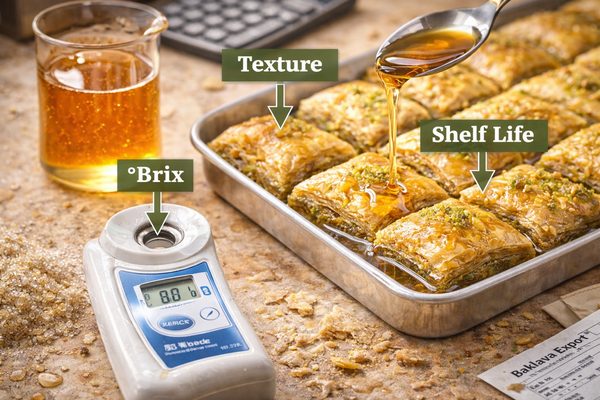
Two baklavas can use the same pistachio and butter, yet arrive completely different after shipping. The difference is often syrup: concentration (°Brix), application timing, and how moisture continues to migrate inside the pastry while it sits in cartons.
Key takeaways
- °Brix is your consistency lever: it strongly influences thickness, stickiness, and moisture behavior.
- Texture is a moving target: syrup continues to equilibrate after packing, especially in warm storage.
- Crystallization is preventable: stable syrup requires the right sugar balance and process control.
- Packaging matters as much as recipe: weak seals let humidity in and speed softening.
- Importers should test like exporters: arrival scoring + 7-day hold test reveals real performance.
On this page
- What °Brix means (and why it matters)
- How syrup controls texture: crunch vs chew vs sticky
- Absorption timing: when syrup is added changes everything
- Crystallization: what causes it and how to reduce risk
- Export stress factors: heat, vibration, humidity, and time
- Importer tests: arrival score + hold test
- Copy-paste syrup spec for RFQs
- FAQ
What °Brix means (and why it matters)
°Brix is a practical way to describe syrup concentration. In simple terms: higher °Brix usually means a thicker syrup with less free water. That can help shelf stability, but it can also increase stickiness or crystallization risk if the process isn’t controlled.
Importer mindset
- Consistency beats “secret recipes”: you want repeatable syrup behavior batch to batch.
- Target range beats single number: specify an acceptable °Brix window for tolerance.
- Pair °Brix with texture outcomes: define what “premium” feels like (crisp layers, not sticky).
How syrup controls texture: crunch vs chew vs sticky
Texture is a balance between pastry structure and moisture. Syrup is the main moisture carrier. Too much water availability or too long an equilibration period and you lose crunch.
Common syrup-related texture issues (and what they usually signal)
- Sticky top surface: syrup too heavy on top, poor absorption control, or too high concentration without balance.
- Soft edges / soggy bottoms: pooling + ongoing moisture migration; often worsened by warm storage.
- Dry interior with sweet surface: uneven application or timing mismatch.
- Crunch disappears quickly after opening: barrier packaging is weak or syrup keeps migrating.
Absorption timing: when syrup is added changes everything
Syrup behavior is not only concentration—timing matters. Hot vs warm vs cool application changes how fast syrup moves through layers and whether it stays glossy or becomes sticky.
What importers should ask
- At what stage is syrup applied (immediately after bake vs after rest)?
- Is absorption time standardized before packing?
- How is pooling prevented (tray angle, resting time, dosing method)?
Crystallization: what causes it and how to reduce risk
Sugar crystallization can show up as grainy syrup, white crystals, or a rough mouthfeel. It’s often triggered by concentration, agitation, and temperature swings during transit or storage. A stable syrup is engineered to resist crystallization under real-world conditions.
Practical warning signs
- Visible crystals at tray corners or on piece surfaces
- Grainy syrup texture instead of smooth
- Batch-to-batch variability (some trays crystalize, others don’t)
Risk reducers (buyer-friendly)
- Request process consistency and stable syrup formulation practices (no “random boil time”)
- Avoid extreme temperature swings in storage when possible
- Choose packaging that reduces heat exposure and humidity exchange
Export stress factors: heat, vibration, humidity, and time
Syrup behavior changes with environment. Warm temperatures reduce viscosity and can accelerate migration. Vibration can drive syrup to corners and increase pooling. Humidity entering the pack speeds softening and can dull aroma.
Route-based guidance
- Air shipments: faster, but still sensitive to warehouse heat at origin and destination.
- Sea shipments: long duration raises the need for stable syrup + strong barriers + shelf-life testing.
- Hot climates: prioritize barrier packaging and syrup profiles that resist softening and stickiness.
Importer tests: arrival score + hold test
If you buy for export, evaluate like an exporter. A quick sensory check is not enough—run a short hold test.
Arrival scoring (day 1)
- Pooling: none / light / heavy
- Stickiness: dry-glossy vs tacky
- Crunch: crisp layers vs soft chew
- Uniformity: consistent across tray
Hold test (7 days recommended)
- Store sealed in your typical conditions (warehouse/retail backroom).
- Re-check pooling, stickiness, crunch, and aroma.
- Record any change; compare suppliers using the same protocol.
Copy-paste syrup spec for RFQs (export programs)
Use this to reduce misunderstandings and get comparable offers.
RFQ syrup specification template
- Texture target: crisp layers; no syrup pooling; surface glossy but not sticky
- Syrup control: consistent dosing per tray; standardized absorption/rest time before packing
- Quality risks to avoid: grainy texture / crystallization / heavy pooling / tacky surface
- Testing: arrival score + 7-day hold test under buyer storage conditions
- Documentation: batch/lot, production date, shelf-life target, storage guidance
- Route: air/sea + destination climate notes (supplier to recommend best syrup profile)
FAQ
Is sweeter baklava always higher quality?
No. Premium is about balance: crisp layers, clean nut flavor, and syrup that supports aroma without becoming sticky or heavy. Too sweet can mask pistachio and butter notes.
Why does baklava feel drier in some markets?
Many exporters tune syrup and absorption for route stability and local preferences. Some markets prefer lighter syrup to preserve crispness; others expect a richer, sweeter bite.
How do I prevent softening in long shipping routes?
Combine three levers: stable syrup behavior, controlled absorption before packing, and high-barrier packaging that blocks humidity exchange. Then validate with a hold test that matches your real conditions.
Continue the Academy series
Tell us your destination and shelf-life target. We’ll recommend the right syrup profile + packaging setup for your route.