TurkishBaklavaCompany.com TBC A.S.
Premium Turkish Baklava, exported worldwide with uncompromising quality.

Baklava Academy

A practical, export-first knowledge base about Turkish baklava types, Gaziantep pistachios, ingredient standards, packaging, storage, shelf life, logistics, and sourcing in Turkey.

Turkish Baklava Guide Export Packaging Shelf Life Sourcing in Turkey
Export-ready • Premium Pistachio
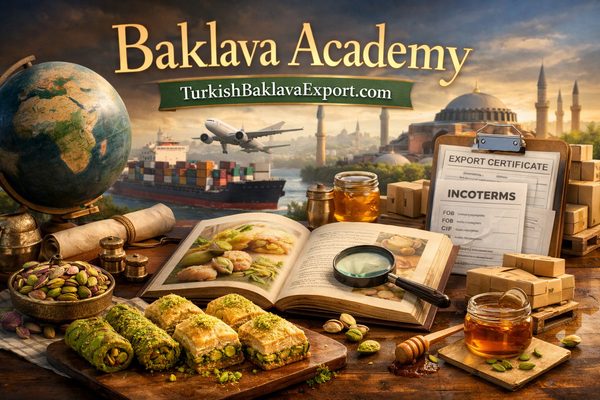
Baklava Academy learning concept with pistachio and honey tones

Learn baklava the way importers and distributors need it

Baklava is simple on the surface—thin dough, nuts, butter, syrup—yet export success depends on details: pistachio selection, syrup balance, crunch preservation, and packaging that survives international logistics. This academy is built for buyers who want fewer surprises: consistent quality, predictable shelf life, and confident shipping decisions.

What you’ll get • Export-first

Clear answers to real trade questions

Which baklava formats travel best? When is cold chain necessary? What packaging prevents crushing and oil migration? How do you evaluate pistachio color, aroma, and freshness? We cover the decisions that affect claims, returns, and repeat orders.

Quality ControlLogisticsCompliance
Built for buyers • Retail & wholesale

Assortments that sell (and stay crisp)

Learn how to build assortment boxes, choose portion sizes, and position premium Turkish baklava in retail and foodservice. You’ll also find practical storage guidance for displays and back-of-house handling.

RetailFoodserviceMerchandising
For sourcing • Supplier selection

Smarter buying in Turkey

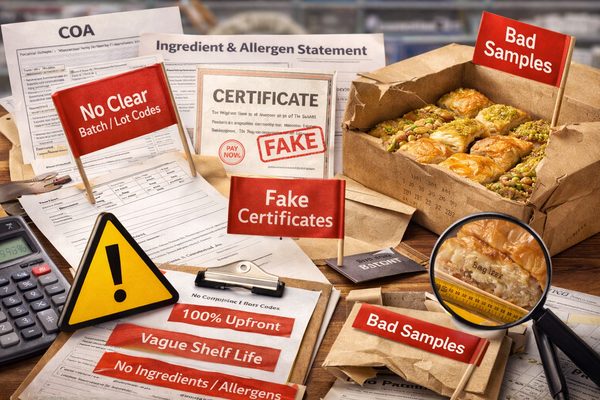
Use our checklists to compare suppliers, spot red flags, understand documentation (like COA), and structure safer payment and contracting terms—especially for first orders and private label projects.

SourcingPrivate LabelRisk Reduction

Start here: the fastest path to export confidence

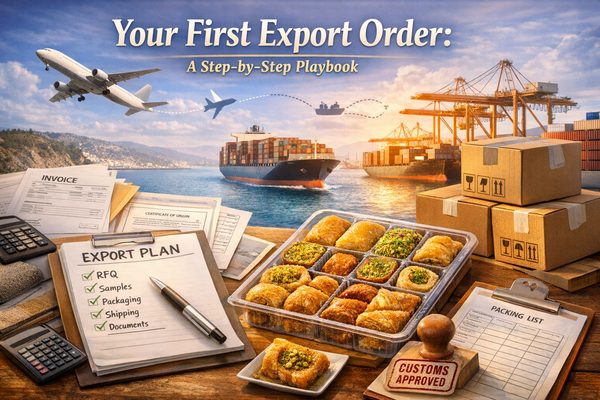
If you’re short on time, begin with these high-impact guides. They cover the core buyer decisions: ingredient quality, shelf life, packaging, shipping route, documents, and your first export order workflow.

Exporter Toolkit: the decisions that protect margins

Importing baklava becomes easier when you treat it like a system: ingredients → process → packaging → route → compliance. Use this quick framework to align expectations between buyer and supplier.

Framework • Buying specs

What to specify in your RFQ (request for quote)

A strong RFQ reduces misunderstandings. Consider specifying:

  • Product format: cut style, piece weight, assortment breakdown.
  • Ingredient expectations: nut type, pistachio grade, butter type, syrup style.
  • Packaging: tray type, sealing method, box size, label language needs.
  • Logistics: destination, timeline, target Incoterm, ambient vs cold chain.
  • Compliance: allergen declaration, halal request (if applicable), documentation list.
RFQPrivate LabelExport
Risk control • Common pitfalls

Where export problems usually start

Most issues trace back to mismatched expectations. The most common areas are: temperature exposure, package compression, moisture pickup, labeling inconsistencies, and unclear receiving/storage instructions. The Academy articles are designed to help you prevent these before your shipment leaves Turkey.

RiskReturnsConsistency
Practical note • Compliance

Country rules change—use a “confirm-and-lock” habit

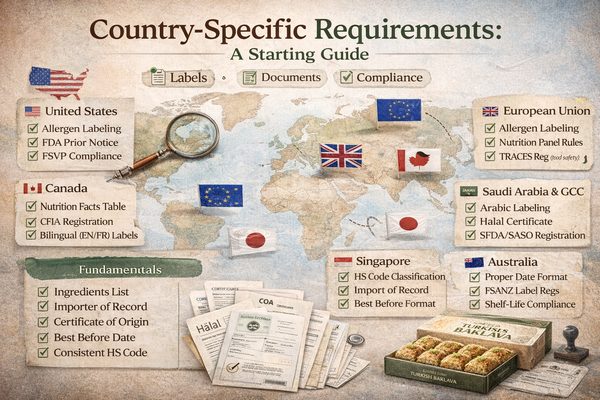
Import requirements can vary by destination and can change over time. A reliable workflow is: confirm destination rules → lock label artwork → lock documentation list → start production. If you export to multiple markets, keep a versioned label/spec pack per country.

LabelingAllergensDocuments

Frequently asked questions

Quick answers for buyers. For deeper detail, open the related Academy articles below.

Export & shelf life

How do you protect baklava crunch during shipping?

Crunch protection is about moisture control and physical protection: rigid trays, piece separation, barrier films, stable sealing, and outer packaging that resists compression. Choose the approach based on cut style and route risk. See: Crunch Preservation and Export Packaging.

What affects baklava shelf life the most?

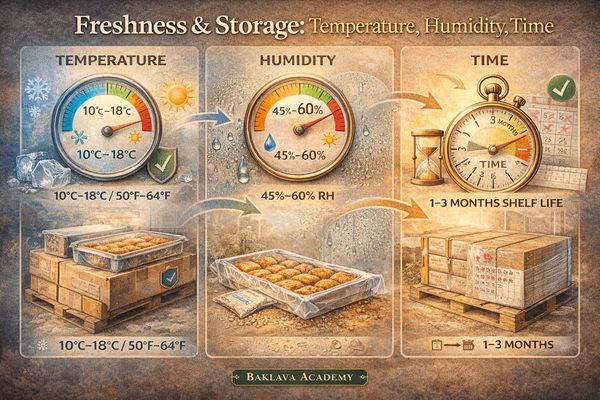
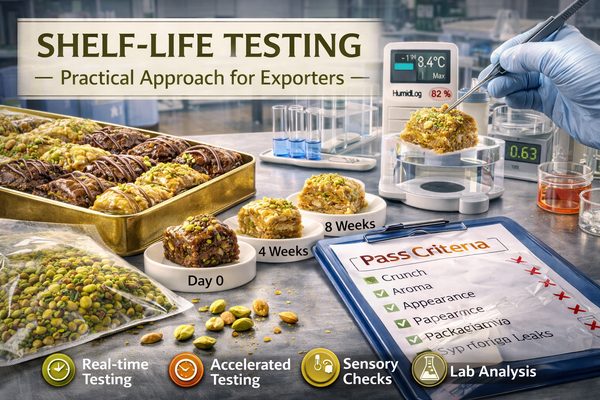
Recipe (especially syrup concentration and fillings), packaging barrier performance, and storage temperature. Shelf life should be validated with practical testing aligned to real logistics conditions. See: Shelf-Life Testing.

Is cold chain always required for premium baklava?

No. Many baklava types can ship at controlled ambient conditions depending on route length and season. Some cream-filled products and specific destination requirements may justify cold chain. See: Cold Chain or Ambient?.

Sourcing & compliance

What should I ask a supplier before placing a first order?

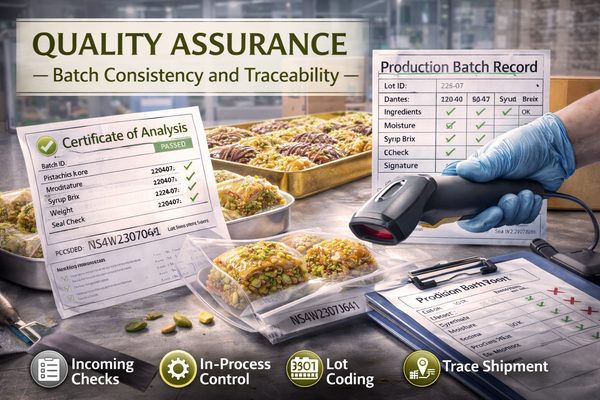
Ask for product specs, packaging details, documentation examples, allergen statements, and process controls for batch consistency and traceability. Confirm lead times and seasonal constraints. See: Choosing a Supplier and Quality Assurance.

How do allergens work for baklava labeling?

Baklava often contains allergens like wheat (gluten), nuts, and dairy. Labels must reflect the destination market’s requirements and should match your product spec exactly. See: Allergens and Labeling.

Which Incoterm is common for baklava export deals?

There’s no single best answer—Incoterms depend on who controls freight, insurance, and local clearance. The right choice is the one that matches your operational capability and risk tolerance. See: Incoterms for Sweets.

Private label & assortment

How do I build a premium assortment box that sells?

Balance recognizable classics with signature pistachio items, standardize piece sizes, and choose packaging that protects the highest pieces. Assortments should reflect local preferences and price points. See: Winning Assortment Box.

Can I private label baklava for my brand?

Yes—private label typically includes packaging structure, artwork, labeling compliance, and shipment terms. The most important step is locking specifications before production to avoid rework. See: Private Label Baklava.

Does seasonality matter for ordering?

Yes—holiday peaks can affect production capacity, lead times, and logistics congestion. Plan early for Ramadan/Eid and key gifting periods. See: Seasonality.

Glossary: key terms you’ll see in specs and export discussions

These are common terms used by baklava producers and export buyers. Knowing them helps you write clearer RFQs and compare offers faster.

Ingredients & craft

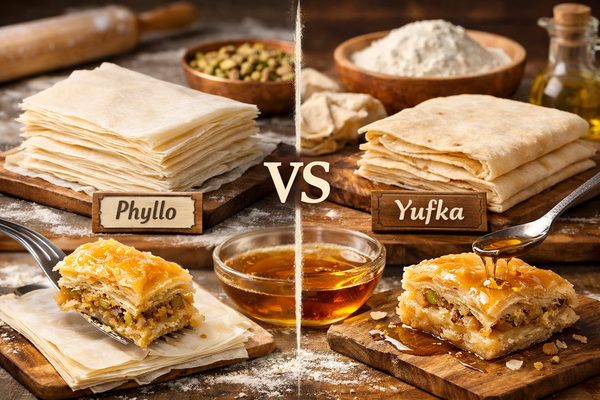
Yufka / Phyllo: ultra-thin dough layers; handling affects flake and crispness.

Sade yağ (clarified butter): butterfat used for aroma and clean finish.

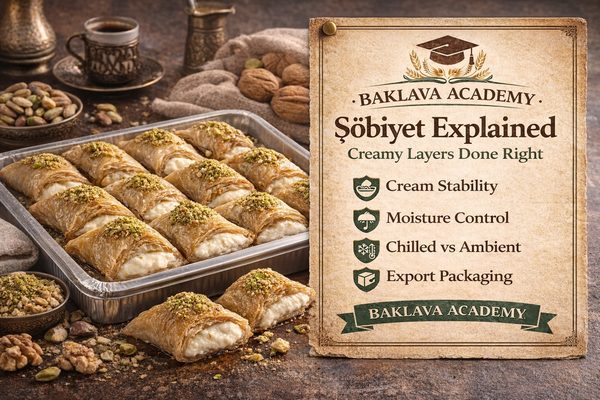
Şöbiyet: cream-filled style that often needs stricter temperature control.

Sarma: rolled pistachio baklava format; often a premium signature item.

Quality & stability

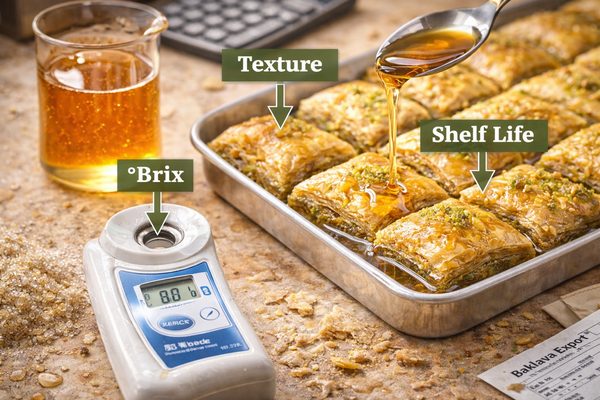
Brix: syrup concentration; impacts sweetness and texture over time.

Moisture control: preventing crisp layers from absorbing humidity.

Oil migration: fat movement into packaging or between layers; managed by structure and barrier.

Batch consistency: stable taste/appearance across production runs; supported by QA and traceability.

Export & compliance

COA (Certificate of Analysis): lab report that supports quality and safety claims.

Incoterms: trade terms defining responsibility for transport, risk, and clearance.

Allergen statement: mandatory declarations (nuts, dairy, gluten) based on market rules.

Cold chain: refrigerated logistics; used when product or market conditions demand it.

All Baklava Academy Articles

Browse the full Academy library below. Each article is designed to be practical for export: what to specify, what to test, how to package, and how to ship with fewer surprises. Use these guides to train new buyers, align suppliers, and build a repeatable importing process.

Ingredients Quality Storage Packaging Logistics Compliance Private Label
The Origin Story: Where Baklava Comes From — Baklava Academy
Article 1 • 6–10 min read

The Origin Story: Where Baklava Comes From

Understand baklava’s regional roots and how “style differences” impact buying specs, assortment strategy, and customer expectations.

HeritageProduct knowledgeMarkets
Clarified Butter (Sade Yağ): Why It Matters — Baklava Academy
Article 4 • 6–10 min read

Clarified Butter (Sade Yağ): Why It Matters

Learn why butter choice affects aroma, aftertaste, and perceived “premium”—and how to avoid greasy finishes in transit.

ButterFlavorQuality
Şöbiyet Explained: Creamy Layers Done Right — Baklava Academy
Article 8 • 6–10 min read

Şöbiyet Explained: Creamy Layers Done Right

What makes great şöbiyet (cream-filled baklava), and what buyers should know about storage, temperature, and routing.

Cream-filledCold chainHandling
Walnut Baklava: Flavor Profile and Markets — Baklava Academy
Article 9 • 6–10 min read

Walnut Baklava: Flavor Profile and Markets

Where walnut baklava shines, how to position it alongside pistachio, and how to select formats for price-sensitive markets.

WalnutMarketsAssortment
Kadayif Desserts: Tel Kadayif vs. Künefe — Baklava Academy
Article 10 • 6–10 min read

Kadayif Desserts: Tel Kadayif vs. Künefe

Understand kadayıf types, texture expectations, and export considerations—especially for cheese-based künefe products.

KadayifFormatsLogistics
How Premium Baklava Is Graded — Baklava Academy
Article 11 • 6–10 min read

How Premium Baklava Is Graded

A practical grading lens: ingredients, aroma, crunch, uniformity, and presentation—so buyers can compare quotes fairly.

GradingQualityBuying
Incoterms for Sweets: EXW, FOB, CIF, DDP — Baklava Academy
Article 15 • 6–10 min read

Incoterms for Sweets: EXW, FOB, CIF, DDP

Understand who controls freight, risk, and clearance—so you can choose Incoterms that fit your team and destination.

IncotermsTradeRisk
Halal Considerations for Baklava Export — Baklava Academy
Article 17 • 6–10 min read

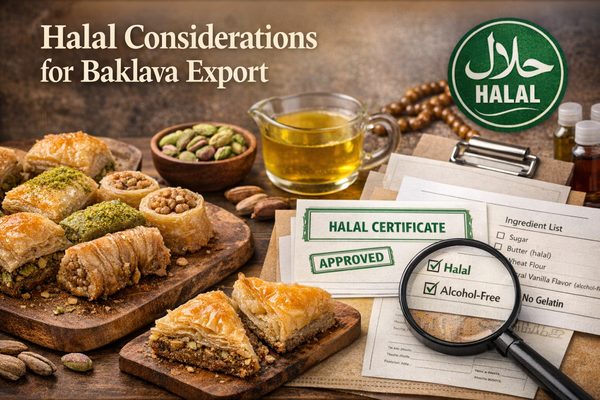
Halal Considerations for Baklava Export

What halal-focused buyers typically request: ingredient transparency, process clarity, and documentation alignment.

HalalComplianceExport
Allergens and Labeling: Nuts, Dairy, Gluten — Baklava Academy
Article 18 • 6–10 min read

Allergens and Labeling: Nuts, Dairy, Gluten

Buyer-friendly labeling basics for baklava: allergens, cross-contact considerations, and why accuracy prevents border issues.

AllergensLabelingRetail
Private Label Baklava: From Brief to Shelf — Baklava Academy
Article 19 • 6–10 min read

Private Label Baklava: From Brief to Shelf

A step-by-step view of private label execution: specs, samples, packaging, artwork, compliance checks, and rollout planning.

Private LabelPackagingWorkflow
How to Build a Winning Assortment Box — Baklava Academy
Article 20 • 6–10 min read

How to Build a Winning Assortment Box

Design assortments that sell: balance classics with premium pistachio items, standardize portion sizes, and protect top pieces.

AssortmentRetailGifting
Pistachio Percentage: What 'Premium' Really Means — Baklava Academy
Article 21 • 6–10 min read

Pistachio Percentage: What 'Premium' Really Means

How to talk about “premium” without vague claims—what pistachio percentage signals, and what matters just as much (grade & freshness).

PistachioPremiumSpecs
Butter Quality: Taste Tests and Standards — Baklava Academy
Article 22 • 6–10 min read

Butter Quality: Taste Tests and Standards

Simple sensory checks and buying standards that help you avoid off-notes and maintain a clean, premium finish.

ButterTestingQuality
Avoiding Sogginess: Moisture Control Tips — Baklava Academy
Article 23 • 6–10 min read

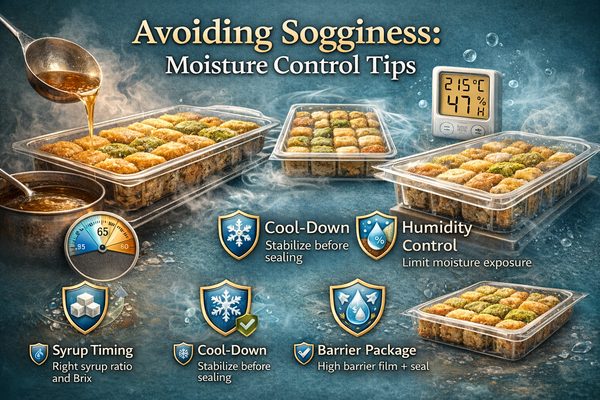
Avoiding Sogginess: Moisture Control Tips

Moisture is the enemy of crisp layers. Learn practical prevention: packaging barriers, storage habits, and handling during receiving.

MoistureTextureStorage
Crunch Preservation: Barrier Films & Trays — Baklava Academy
Article 24 • 6–10 min read

Crunch Preservation: Barrier Films & Trays

How trays, films, and sealing choices impact crispness, aroma retention, and shelf stability—especially in humid climates.

PackagingCrunchShelf life
Foodservice Formats: Trays, Cuts, Portioning — Baklava Academy
Article 26 • 6–10 min read

Foodservice Formats: Trays, Cuts, Portioning

Foodservice needs reliability: portioning, tray formats, and handling tips that keep service smooth and waste low.

FoodservicePortioningFormats
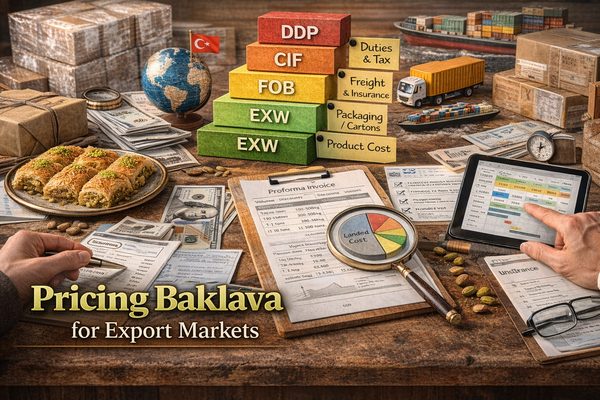
Pricing Baklava for Export Markets — Baklava Academy
Article 29 • 6–10 min read

Pricing Baklava for Export Markets

Export pricing that holds up: cost drivers, packaging impacts, freight realities, and how assortments influence landed cost.

PricingExportLanded Cost
Pistachio Storage: Keeping Green Color Stable — Baklava Academy
Article 33 • 6–10 min read

Pistachio Storage: Keeping Green Color Stable

Protect pistachio color and aroma with storage discipline: temperature stability, packaging barriers, and oxidation awareness.

PistachioStorageQuality
Chocolate Baklava: Pairing and Packaging — Baklava Academy
Article 34 • 6–10 min read

Chocolate Baklava: Pairing and Packaging

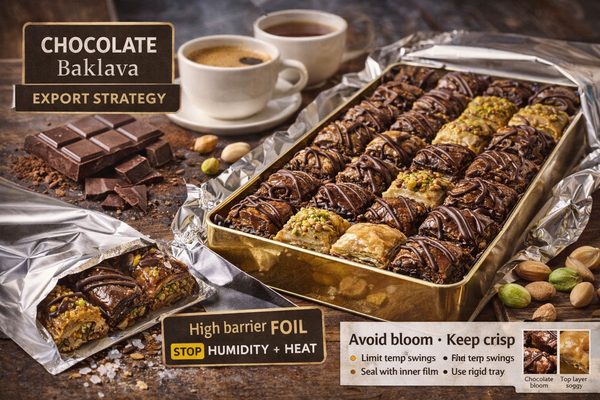
Chocolate changes stability and packing needs. Learn pairing ideas, presentation tips, and how to protect chocolate quality in transit.

ChocolatePackagingGifting
Sugar-Free Baklava: Sweeteners and Texture — Baklava Academy
Article 35 • 6–10 min read

Sugar-Free Baklava: Sweeteners and Texture

What’s realistic for “sugar-free” claims, how sweeteners affect texture, and what buyers should verify for labeling compliance.

Sugar-freeLabelingTexture
Gluten-Friendly Options: What’s Realistic — Baklava Academy
Article 37 • 6–10 min read

Gluten-Friendly Options: What’s Realistic

Gluten-friendly concepts, cross-contact realities, and how to communicate accurately for buyers and labeling requirements.

GlutenAllergensCompliance
Gift Tins: Premium Unboxing and Protection — Baklava Academy
Article 38 • 6–10 min read

Gift Tins: Premium Unboxing and Protection

Gift tins can elevate premium perception—if they also protect structure. Learn how to balance unboxing, cost, and transit safety.

GiftingPackagingPremium
Contracting & Payment Terms: Reducing Risk — Baklava Academy
Article 40 • 6–10 min read

Contracting & Payment Terms: Reducing Risk

How to reduce risk with clear specs, milestones, and practical payment structures—especially for first-time export orders.

ContractsPaymentsRisk
Customs Clearance Basics for Food Imports — Baklava Academy
Article 44 • 6–10 min read

Customs Clearance Basics for Food Imports

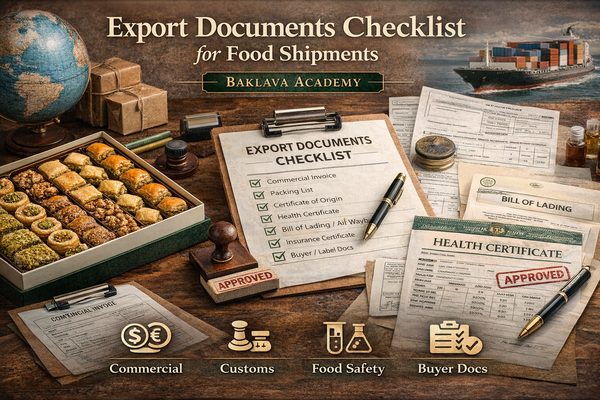
A buyer-oriented overview of clearance flow, common delay points, and how to prepare documents and labels for smoother entry.
CustomsImportDocuments
How to Store Baklava in Retail Displays — Baklava Academy
Article 49 • 6–10 min read

How to Store Baklava in Retail Displays

Display storage tips that protect flavor and crispness: rotation, humidity pitfalls, and handling that keeps pieces looking premium.

RetailStorageFreshness

Tip: For faster sourcing conversations, include your destination country, preferred assortment, packaging format, and target Incoterm in your first message.