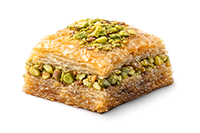

Premium is not a single number
Pistachio percentage is a useful metric—but only when it’s paired with grade and consistency. A “high %” product can still feel cheap if the pistachio is dull, mixed-grade, overly dusty, or oxidized.
Key takeaways
- % is one lever: premium is % + grade + freshness + cut + stability.
- Grade matters: better pistachio can deliver stronger aroma at a lower %.
- Consistency is the export test: lot-to-lot control beats a single impressive sample.
- Packaging protects the claim: oxygen/light/heat can flatten aroma and dull color.
On this page
What “pistachio percentage” usually means
In practice, “pistachio percentage” can refer to:
- Filling ratio (how much pistachio is inside relative to other components).
- Pistachio share of total nuts (less common in pistachio-only products).
- Recipe target vs. actual batch result (these can differ if weight control is weak).
For export buyers, the right goal is: define it clearly (what the % refers to) and demand lot consistency.
The 6 real signals of premium
1) Aroma intensity (fresh, nutty, “green”)
Premium pistachio smells vivid and clean. If aroma is muted, stale, or “oily,” the % won’t save it.
2) Color stability (stays bright, not dull)
Premium pistachio holds a vibrant tone longer. Poor storage, oxidation, or mixed-grade nuts can look grayish or brownish over time.
3) Cut size control (powder vs granule)
Too much dust can taste dry and go oily faster; too coarse can feel uneven. Premium producers control cut size by SKU.
4) Defect control (shell, skins, off-notes)
Premium batches minimize bitter skins, shell fragments, and “feed” notes.
5) Balance with syrup & butter
A premium product tastes integrated: pistachio leads, syrup supports, butter finishes clean. Over-syruped baklava can hide low-grade pistachio.
6) Repeatability across lots
Premium in export is repeatability: the second and third shipments should match the first.
How to verify pistachio % (buyer method)
You don’t need a lab to create a reliable “importer check.” You need a method that is repeatable.
Simple verification workflow
- Define the unit: 1 piece (standard weight) or 100 g sample.
- Take a representative sample: pieces from the center and edges of the tray.
- Separate filling carefully (where possible) and weigh.
- Record results by lot code and compare to supplier claim.
This won’t be perfect for every cut/style, but it creates a consistent control system that quickly reveals drift between lots.
What to request from suppliers (specs + docs)
- Clear pistachio % definition: percent of total product, or percent of filling, etc.
- Pistachio grade statement: origin/region, cut size, and sensory target.
- Lot codes + production date: printed on cartons and inner packs.
- Batch documentation: COA where available (especially for larger programs).
- Storage guidance: temperature range and light/oxygen protection.
For deeper pistachio quality signals (color/aroma/selection), see: Gaziantep Pistachios 101.
Export risks: why “premium” can fade in transit
Even premium pistachio can lose impact if the system around it is weak. Watch these three export failure modes:
- Aroma loss: oxidation + time + warm storage flattens pistachio notes.
- Color dulling: light/oxygen exposure and older nuts reduce “green” appeal.
- Oil migration: nut oils can migrate into phyllo and packaging if barriers are weak, changing mouthfeel and appearance.
Packaging details matter here. Related: Crunch Preservation: Barrier Films & Trays.
Copy-paste pistachio % RFQ
RFQ template
- Product: Pistachio baklava (export program)
- Pistachio % (define): ________ (e.g., % of total product by weight)
- Pistachio grade: origin/region, cut size target, defect limits (shell/skins), aroma/color target
- Lot control: lot codes + production date on cartons and inner packs
- Documentation: COA per lot where available; ingredient/allergen statement
- Consistency requirement: supplier to match approved reference sample (sensory + appearance)
- Shelf-life target: ________ days; confirm with shipping method (air/sea)
- Packaging: barrier film + tray protection to reduce aroma loss and oil migration
FAQ
Is higher pistachio percentage always better?
No. Higher % can improve richness, but if the pistachio is stale or mixed-grade, the product can taste flat or oily. Premium means the pistachio is aromatic, clean, and consistent—not just abundant.
How can I compare two suppliers fairly?
Standardize the comparison: same cut/style, same serving temperature, same sampling method, and record results by lot code. Ask both suppliers to match an approved reference sample.
What’s the simplest “premium” purchasing rule?
Buy the pistachio experience: strong aroma, vibrant appearance, clean finish, and stable results across shipments. Percentage is part of the spec—never the whole spec.