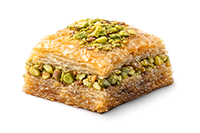

Why cut format matters more than most buyers expect
Buyers often compare baklava by pistachio quality and butter aroma (correct), but export performance is frequently decided by geometry. Every cut creates different stress points (chips and cracks), different exposed edge area (syrup uptake and softening), and different packing behavior (headspace, movement, compression). If your goal is predictable arrivals, the cut must match your route.
Key takeaways
- Square cuts are the most stable: fewer fragile tips and efficient packing reduces movement.
- Diamond cuts are premium-looking but chip easier: sharp corners and thin tips shed crumbs if packaging is loose.
- Tray-slices are great for foodservice: fast plating and consistent portions, but require rigid trays to avoid cracking.
- Cut size influences sweetness and crunch: smaller pieces absorb syrup faster and soften sooner if humidity isn’t controlled.
- Standardize using weight + counts: “pieces per kilo” + target piece weight range beats vague size descriptions.
On this page
- Cut overview and how to choose
- Diamond cut: classic look, higher chip risk
- Square cut: stability, consistency, easy packing
- Tray-slice: foodservice favorite
- Portion control: how to standardize sizes
- Importer grading checklist (arrival + hold test)
- Packaging strategies by cut type
- Copy-paste RFQ spec template
- FAQ
Cut overview: how to choose the right format
There is no “best” cut universally—there is a best cut for a specific sales channel and shipping route. Use this quick decision guide:
Decision guide (plain language)
- Premium retail gifting: Diamond or high-finish square (choose based on packaging strength and expected handling)
- Mainstream retail: Square (clean appearance, portion consistency, lowest damage rate)
- Hospitality / catering: Tray-slices (fast plating, uniform portions)
- Long routes / warm warehousing: Larger squares or tray-slices with stronger barriers; avoid fragile small diamonds unless packaging is excellent
- High-vibration routes: Squares with tight cavities and minimized headspace
Diamond cut: classic look, higher chip risk
Diamond is the iconic baklava shape—instantly recognizable and often perceived as premium. The tradeoff is fragility: the pointed ends are natural break points during vibration and handling.
Best use cases
- Gift boxes and premium assortments where presentation is a priority
- Markets that expect the “traditional diamond” look
- Programs with tight cavities, minimal headspace, and controlled handling
Performance notes
- Crumb risk: higher (tips chip)
- Pack efficiency: lower (more wasted space)
- Syrup behavior: tips and edges can absorb faster (watch softening if syrup is heavy)
Diamond cut quality signals
- Clean, sharp lines—no “ragged” cuts
- Tips intact across the tray (few broken points)
- Even browning with no burnt edges on tips
- No syrup pooling in tray corners
Square cut: stability, consistency, easy packing
Square is the workhorse format for export. It packs efficiently, distributes pressure evenly, and reduces fragile points. For importers, it’s the easiest cut to standardize and the most forgiving during long shipping routes.
Best use cases
- Mainstream retail programs and repeat wholesale orders
- Private label lines where consistency is non-negotiable
- Routes where cartons will be handled multiple times
Performance notes
- Crumb risk: lower (no sharp tips)
- Pack efficiency: high (tight grid)
- Portion control: best (easy weight control per piece)
Square cut quality signals
- Uniform piece size and height
- Edges aligned; no collapsed corners
- Consistent syrup sheen without stickiness
- Minimal crumbs in corners of the tray
Tray-slice: foodservice favorite
Tray-slices are long rectangular portions cut for speed and uniform plating. Hotels, airlines, catering, and dessert counters like them because they are easy to portion and display. The risk is cracking if slices are too thin or if the tray lacks rigidity.
Best use cases
- Hospitality, catering, and dessert service where speed matters
- Programs that require precise per-portion cost control
- Large-format packaging where pieces shouldn’t shift
Performance notes
- Crumb risk: medium (depends on rigidity and headspace)
- Pack efficiency: high (aligned slices)
- Handling: best when slices sit snugly in a rigid tray with a strong inner seal
Portion control: how to standardize sizes across suppliers
“Small / medium / large” is not a specification. For export purchasing, define sizes with measurable targets so you can compare offers, price accurately, and reduce customer complaints about inconsistency.
Recommended ways to specify size
- Target piece weight range: e.g., 22–28 g per piece (or any range that matches your market)
- Pieces per kilogram: e.g., 36–44 pieces/kg (ties directly to cost and retail pricing)
- Tray configuration: pieces per tray + tray net weight
- Tolerance: define allowed variation (piece weight, count, and visual uniformity)
Simple importer rule
If the supplier can’t provide a consistent piece weight range and tray configuration, the program will struggle—especially when scaling volume.
Importer grading checklist (arrival + hold test)
Cuts should be graded not only by taste, but also by how they survive transit. The best cut for your route is the one that arrives with minimal crumbs and holds crunch during your real storage conditions.
Arrival scoring (day 1)
- Integrity: % of pieces with intact corners/tips (especially diamonds)
- Crumbs: corner dusting vs heavy debris
- Syrup control: glossy, not sticky; no pooling
- Uniformity: piece size consistency across tray
- Presentation: clean cut lines; no ragged tears
Hold test (3–10 days)
- Store sealed under your typical warehouse conditions.
- Re-check crunch, stickiness, and edge softening.
- Watch for oil migration in pistachio-heavy products and humidity pickup in thin-cut formats.
Packaging strategies by cut type
If you change the cut without changing packaging, you’ll often increase damage. Match protection to the geometry:
Diamond cut packaging priorities
- Tip protection: snug cavities or separators to stop tip-to-tip collisions
- Minimal headspace: reduce bouncing that chips corners
- Rigid tray + firm carton fit: diamonds should not slide
Square cut packaging priorities
- Compression control: stable stacking and consistent carton strength
- Seal quality: protect crunch from humidity exchange
- Efficient layout: tight packing improves stability and reduces movement
Tray-slice packaging priorities
- Rigid base: prevents flexing that cracks long pieces
- End support: avoid empty gaps at tray ends
- Strong inner seal: reduces softening and aroma fade
Quick packaging failure checks
- Pieces move when tilted: cavities/carton are too loose
- Heavy corner crumbs: headspace + vibration is too high
- Sticky tops: syrup is heavy or seal/barrier is weak
Copy-paste RFQ spec template (classic cuts)
Use this to request comparable offers from suppliers and avoid vague “size” misunderstandings.
RFQ template
- Product: Classic pistachio baklava (or walnut) — specify cut: Diamond / Square / Tray-slice
- Target piece weight: ___ g (range allowed: ___ to ___ g)
- Pieces per kg: ___ (range allowed: ___ to ___)
- Tray format: pieces per tray + tray net weight + outer carton count
- Texture target: crisp layers; no chewing; no syrup pooling
- Presentation: clean cut lines; minimal crumbs; even browning
- Packaging: rigid tray + strong inner seal + tight carton fit (state if separators needed for diamond tips)
- Labeling: allergens, lot/batch, production date, storage guidance
- Testing: arrival scoring + 7-day hold test (crunch + stickiness)
- Route: air/sea, destination climate notes, target shelf life
FAQ
Which cut is best for gifting?
Diamond looks the most traditional and premium, but only if your packaging prevents tip damage. High-finish squares are a strong alternative when you want a cleaner “modern” look with fewer crumbs.
What cut is easiest to private label at scale?
Squares are typically easiest to standardize for piece weight, tray layout, and repeatability. They also ship with lower damage rates.
How do I reduce crumbs without changing the recipe?
Start with geometry and packaging: choose a less fragile cut (square), tighten cavities, reduce headspace, and improve carton fit. Crumbs are often a logistics problem before they’re a baking problem.
Continue the Academy series
Tell us your destination and preferred cut. We’ll recommend a tray format and packaging setup that matches your route and sales channel.