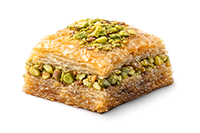

Pistachio Sarma: Craft, Rolling, and Crunch
If classic baklava is about even layers, sarma is about precision rolling. A premium roll holds its shape, delivers a clean crunch, and releases a bright pistachio aroma. A weak roll cracks, leaks oils, and arrives as crumbs. This page shows how to buy sarma that survives export.
Key takeaways
- Rolling tightness = structure: tighter, uniform rolls reduce cracking and improve texture consistency.
- Pistachio is the headline flavor: freshness, color, and aroma matter more than in mixed assortments.
- Syrup should be lighter than tray baklava: sarma should taste “pistachio-first,” not syrup-first.
- Export risks are predictable: breakage, oil migration, humidity softening, and aroma fade from heat.
- Packaging wins or loses the shipment: rigid cavities + strong seals + carton fit reduce damage.
On this page
- What sarma is and why it’s premium
- Craft fundamentals: rolling, phyllo, and bake
- Premium sensory targets: pistachio, butter, crunch
- How importers grade sarma (arrival + hold test)
- Common defects and what they mean
- Packaging to prevent breakage and oil migration
- Air vs sea: route strategy for sarma
- Copy-paste RFQ spec template
- FAQ
What sarma is (and why it’s a premium item)
Pistachio sarma (fıstık sarma) is a rolled baklava where thin phyllo is wrapped around a concentrated pistachio filling, baked until crisp, and then lightly syruped. The roll format exposes the product to more handling stress than tray-cut baklava: cracks and chips show immediately. That’s why sarma is often positioned as a premium SKU—high pistachio ratio, high craftsmanship, and strong visual appeal when executed correctly.
What “good” sarma looks like
- Uniform cylinders: consistent diameter; no flattened sides; ends are neat.
- Defined spiral/layers: phyllo is visible and crisp, not fused into a heavy shell.
- Healthy pistachio center: rich green tone; not pale, not brownish.
- Dry-to-touch surface: glossy but not sticky; no syrup puddles in cavities.
- Minimal crumbs: a few crumbs are normal, but “dusty trays” signal fragile rolling or rough transit.
Why buyers love sarma
In many markets, sarma sells on first bite: strong pistachio aroma and a clean crunch. It’s perfect for gifting, premium assortments, and hospitality plating—when the rolls arrive intact.
Craft fundamentals: rolling, phyllo, and bake
Sarma quality is a chain: phyllo thickness → filling consistency → rolling tension → bake dryness → syrup absorption. If one link is weak, the roll cracks or softens. Importers don’t need a factory tour to evaluate craft—good samples reveal it.
Rolling tension (the hidden premium signal)
- Too loose: rolls collapse slightly, layers separate, and breakage increases during shipping.
- Too tight: can crack during bake or cut; texture becomes hard rather than crisp.
- Just right: roll holds shape, layers are crisp, and the bite fractures cleanly.
Bake and dryness
Sarma needs a bake that sets the roll structure. If under-baked, syrup makes it soft; if over-baked, it becomes bitter and dry. Premium sarma tastes toasted, not burnt, and stays crisp at the edges.
Syrup approach
Compared to classic pistachio baklava, sarma syrup is often lighter. The best sarma is “pistachio-first”: syrup should support crunch and aroma, not dominate sweetness. Excess syrup increases stickiness, leakage, and softening risk.
Premium sensory targets: pistachio, butter, crunch
Sarma is a spotlight product. Small differences in pistachio freshness and butter aroma are obvious to customers. Use these targets to align suppliers and buyers.
Taste & aroma targets
- Pistachio aroma: bright, nutty, clean—no “stale pantry” or dusty notes.
- Butter note: warm bakery aroma; not heavy grease; not waxy mouthfeel.
- Sweetness: controlled; premium sarma should not feel syrup-heavy.
- Aftertaste: pistachio linger is good; bitterness or “burnt toast” is not.
Texture targets
- Crunch: clean fracture on first bite; not chewy; not rock-hard.
- Layer definition: phyllo layers remain distinct; not fused and gummy.
- Center feel: pistachio filling is cohesive, not sandy-dry and not oily-wet.
How importers grade sarma (arrival + hold test)
Sarma grading should include both presentation and stability. A roll that looks perfect on arrival can still fail after a week if oils migrate or humidity softens the crunch. Grade in two steps:
Step 1 — Arrival scoring (day 1)
- Integrity: % of rolls intact (no cracks, no broken ends)
- Crumb level: clean cavities vs dusty tray
- Syrup control: glossy without pooling or stickiness
- Aroma: pistachio-forward, clean butter note
- Mouthfeel: crisp fracture, no greasy coating
Step 2 — Hold test (3–10 days)
- Store sealed under typical warehouse conditions.
- Re-check crunch, oil stains on liners, and aroma fade.
- If the tray develops heavy staining or crunch drops quickly, the product needs improved barriers or a different route strategy.
Common defects and what they mean
1) Cracked rolls / broken ends
- Spot it: visible splits, broken tips, loose spirals.
- Usually caused by: weak rolling tension, over-bake brittleness, loose tray cavities, or rough handling.
2) Excess crumbs (“dusty tray”)
- Spot it: pistachio dust and phyllo shards accumulating in corners.
- Usually caused by: fragile rolls + vibration during transit, or inadequate tray fit.
3) Oil migration / staining
Pistachio is naturally fatty. In warm storage, oils can migrate and stain liners, dulling aroma and creating a greasy mouthfeel.
- Spot it: translucent oily marks on paper/liner; greasy touch; heavier mouthfeel.
- Usually caused by: warm route, insufficient barrier seal, or high-fat filling that needs better control.
4) Softened crunch
- Spot it: roll bends slightly; bite is chewy; phyllo layers feel damp.
- Usually caused by: humidity pickup, excess syrup, or inadequate inner barrier packaging.
Packaging to prevent breakage and oil migration
For sarma, packaging is part of the product. The ideal export setup reduces vibration, keeps rolls separated, and prevents aroma loss and oil stains.
Packaging priorities (in plain language)
- Rigid cavities: each roll sits securely so it can’t collide with others.
- Strong seal: reduces humidity exchange and slows aroma fade.
- Oil-resistant liner: keeps cartons clean and protects presentation.
- Carton fit: minimal headspace reduces bounce and cracking.
- Pallet discipline: stable stacking prevents compression damage.
Arrival checks for packaging failure
- Do rolls slide? If yes, cavities/carton fit are too loose.
- Do corners show crumbs? Often vibration + headspace.
- Do liners show stains? Heat exposure and/or insufficient barrier.
Air vs sea: route strategy for sarma
Sarma can ship by either mode, but the risk profile differs:
Air (best for premium crunch and presentation)
- Why importers choose it: less time for humidity pickup, aroma fade, and handling cycles.
- Best for: premium retail, gifting, and “fresh arrival” programs.
- Packaging still matters: air cargo handling can be rough; rigid cavities reduce cracking.
Sea (possible for stable programs with stronger packaging)
- Why it’s harder: longer time, more vibration cycles, and higher heat exposure risk.
- Best for: established distribution with predictable receiving and strong carton/pallet design.
- Must-do: route simulation + hold test to validate crunch and staining behavior.
Practical recommendation: Position sarma as a premium item and ship it in smaller, better-protected formats if your destination has warm warehousing. For mixed assortments, keep sarma in separate secure cavities to prevent cross-damage.
Copy-paste RFQ spec template (pistachio sarma)
Use this template to get comparable offers and reduce quality surprises.
RFQ template
- Product: Pistachio Sarma (Fıstık Sarma) — specify roll length/diameter, piece weight, tray count
- Pistachio: grade requirements; aroma target; color expectation (fresh green, not dull)
- Syrup level: light-to-medium; no pooling; not sticky; pistachio-forward taste
- Texture target: crisp fracture; defined layers; not chewy; not rock-hard
- Oil migration control: minimal staining after 7-day sealed hold test
- Packaging: rigid roll cavities + strong inner seal + oil-resistant liner + tight export carton fit
- Labeling: allergens (nuts/gluten/dairy if used), lot/batch, production date, storage guidance
- Testing: arrival scoring + 7-day hold test; share packaging layer photos
- Route: specify air/sea, target shelf life, and destination climate notes
FAQ
Why is sarma more fragile than classic baklava?
The roll structure concentrates stress at the ends and edges. Small cracks become visible quickly and grow during vibration. That’s why rigid cavities and tight carton fit matter more for sarma than for tray-cut products.
What’s the fastest way to compare two sarma suppliers?
Run the same scoring sheet: integrity %, crumb level, syrup pooling, pistachio aroma, and a 7-day hold test for staining and crunch loss. The weaker supplier usually reveals itself in the hold test.
How should sarma be positioned for retail?
As a pistachio-forward premium roll—ideal for gifting and premium assortments. It often sells best when customers can see intact rolls and bright pistachio color.
Continue the Academy series
Tell us your destination, shipping mode (air/sea), and expected shelf life. We’ll recommend sarma formats and packaging that match your route.