Chocolate Baklava: Pairing and Packaging
Baklava Academy • Article 34 • Updated guide for importers, retailers, and hospitality brands.
Key takeaways
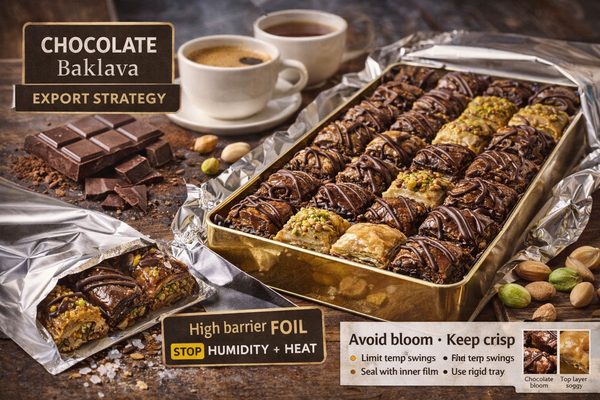
- Chocolate = temperature-sensitive: heat can smear, cold cycles can create bloom, and humidity can dull finishes.
- Pairing matters more than you think: cocoa profile should match nut type, syrup intensity, and serving beverage.
- Packaging is half the product: aroma-barrier + moisture-barrier + rigid protection preserve shine and crunch.
1) What “premium” means for chocolate baklava
- Clean cocoa aroma (not waxy, not burnt, no “candy” notes unless intentionally milk-chocolate styled).
- Controlled sweetness: chocolate adds bitterness and depth—don’t let syrup flatten it.
- Stable appearance: glossy finish without white haze (bloom) and without smearing on the inner wrap.
- Crunch retention: chocolate coatings can trap moisture or soften top layers if not balanced.
2) Pairing logic (nuts, cocoa style, syrup)
- Pistachio + dark chocolate: premium, “grown-up” flavor. Works best with lighter syrup and high pistachio aroma.
- Hazelnut + milk chocolate: classic comfort profile; tolerates slightly richer syrup.
- Walnut + bittersweet: bold and earthy; good for coffee-focused markets.
- Orange/lemon notes (zest/oil): lifts cocoa and reduces perceived heaviness—great for gift assortments.
3) Bloom & smear: what causes the “ugly arrival” problem
- Fat bloom: temperature swings disturb cocoa butter crystal structure; shows as grey/white haze or streaks.
- Sugar bloom: moisture dissolves sugars on the surface, then recrystallizes as the surface dries—often rough/spotty.
- Smear/transfer: chocolate softens and rubs onto film or carton liners when packs get warm.
If the route includes warm warehouses or long last-mile delivery, treat chocolate baklava like a “heat-managed” SKU.
4) Packaging that actually works (export mindset)
- High-barrier inner wrap: reduces aroma loss and slows humidity pickup (important for crunch + chocolate aroma).
- Rigid tray + separators: stops surface rubbing (prevents chocolate transfer and preserves garnish).
- Anti-crush outer shipper: chocolate pieces show damage faster; protect corners and stacking strength.
- Temperature strategy: for sensitive routes, use insulated cartons or choose faster transit lanes (air vs sea) where justified.
5) Serving & beverage pairings (retail + hospitality)
- Espresso / Turkish coffee: best for dark-chocolate profiles and walnut-forward styles.
- Black tea: pairs well with milk-chocolate/hazelnut profiles and sweeter syrups.
- Latte / cappuccino: good for mass-market gifting where consumers want “dessert with coffee.”
Checklist
- Confirm ingredients and allergen statement (nuts, dairy, gluten, soy lecithin if used in chocolate).
- Ask how chocolate is applied (drizzle, coating, filling) and what temperature range it tolerates in transit.
- Request packaging spec: inner film type, tray rigidity, separators, and outer carton strength.
- Specify target shelf life and test with your route (hot warehouse + last-mile is the “real test”).
- Request batch documentation (COA, labeling, production date, lot coding).
Related reads: Export Packaging • Gift Tins • Syrup Science • Country-Specific Requirements