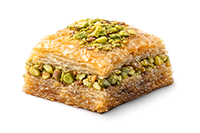

How Premium Baklava Is Graded
This article is designed for real purchasing decisions. You’ll learn: (1) how professionals grade baklava in a way that reduces subjective debate, (2) what “export-ready” means (beyond taste), and (3) how to build a batch acceptance method that protects you as you scale.
Key takeaways
- Premium is measurable: crispness retention, syrup balance, nut freshness, butter aroma, uniform portioning, and clean finish can be scored consistently.
- Export grading is two-layered: evaluate both day-one sensory quality and after-shipping performance (breakage, seepage, oil migration, and stability).
- Consistency beats perfection: buyers forgive minor style differences, but they don’t forgive batch-to-batch surprises.
- One scoring sheet reduces disputes: align on targets, tolerances, and what counts as “reject” before purchase orders scale.
On this page
- The 2-part grading model (sensory + export performance)
- Sensory grading: taste, texture, aroma, appearance
- Export performance grading: what happens after shipping
- A practical scoring sheet (100 points)
- Grade levels: Premium / Standard / Value (how buyers decide)
- Sampling protocol: how to compare suppliers fairly
- Defects library: common failures and what they mean
- Batch acceptance checklist for POs
- FAQ (buyer questions)
The 2-part grading model (sensory + export performance)
Most people grade baklava by taste only. Importers grade it like a product that must survive logistics. The professional model has two layers:
Part A — Sensory quality (what customers experience)
- Texture: crisp top, delicate layers, clean bite (not soggy, not hard).
- Syrup balance: absorbed and glossy, not pooling, not sticky-heavy.
- Nut quality: fresh aroma and clean finish, no stale/bitter notes.
- Butter/fat aroma: clean, warm, premium aroma (no waxy or rancid notes).
- Appearance: even cut, consistent browning, intact layers and corners.
Part B — Export performance (what happens after transit)
- Breakage rate: corners, top layers, and pieces remain presentable.
- Syrup seepage: minimal leaking or pooling after temperature changes.
- Oil migration: packaging stays clean; no greasy saturation or off odors.
- Crispness retention: maintains acceptable crunch after “hold test.”
- Label/documentation accuracy: batch traceability + compliance-ready labeling.
Export-ready premium means it scores well on both layers. Some baklava is excellent fresh but fails the export test.
Sensory grading: taste, texture, aroma, appearance
Sensory grading becomes consistent when you define what “good” looks like and what “bad” looks like. Use the same environment and the same serving method when comparing suppliers (same day, same temperature range, same team).
1) Texture & layer integrity
- Premium: crisp top, delicate flakes, layers remain distinct; bite is clean.
- Downgrade signals: soggy top, dense interior, gummy chew, or overly hard “cracker” bite.
- Common causes: syrup concentration mismatch, humidity exposure, underbake/overbake, packaging weakness.
2) Syrup balance (absorption + finish)
- Premium: syrup is absorbed, glossy, not sticky; sweetness fades cleanly.
- Downgrade signals: pooling in tray, dripping piece, overly sticky coating, cloying sweetness.
- Common causes: too much syrup, wrong temperature timing, syrup too thin/thick, poor cooling before packing.
3) Nut quality (pistachio/walnut)
- Premium: strong nut aroma, clean flavor, low bitterness, fresh finish.
- Downgrade signals: stale/cardboard notes, paint-like oxidation hints, bitter aftertaste.
- Common causes: old stock, oxidation, poor storage, mixing grades, too fine grind exposed to oxygen.
4) Butter / fat aroma
- Premium: warm, clean buttery aroma; mouthfeel is smooth, not waxy.
- Downgrade signals: waxy coating, rancid notes, heavy greasy finish.
- Common causes: fat quality issues, temperature abuse, improper storage, oil migration in packaging.
5) Appearance (presentation is a quality signal)
- Premium: consistent cut, intact corners, even browning, attractive nut distribution.
- Downgrade signals: broken corners, messy nut dust, uneven color, collapsed layers.
- Common causes: weak tray support, rough handling, poor cutting consistency, overbake hotspots.
A buyer trick: the “clean finish” test
Premium baklava finishes clean: sweetness fades, butter aroma stays pleasant, nut taste remains clear. If the finish feels heavy, sticky, or stale, downgrade—even if the first bite is impressive.
Export performance grading: what happens after shipping
Export performance is where many “luxury” products fail. A buyer’s job is to predict what customers experience on arrival, not what you tasted in a fresh sample.
1) Breakage and tray integrity
Breakage is not just cosmetic—it changes portioning, creates crumbs, and damages perceived value. Grade breakage by visible corner loss, top-layer shattering, and crumb accumulation.
2) Syrup seepage (temperature stress indicator)
If syrup leaks or pools after transit, it usually indicates either syrup balance issues or a cooling/packing timing issue. It also indicates that humidity control in packaging may be inadequate.
3) Oil migration (fat stability + packaging)
Oil stains in boxes and liners are a red flag: they often correlate with aroma loss and a greasy mouthfeel. This is a key export KPI because it predicts customer complaints: “it tastes oily” or “it smells old.”
4) Crispness retention (hold test)
Grade crispness on day 1 and again after a controlled hold period. Premium export baklava should remain “acceptable” even if it softens slightly—what matters is that it doesn’t become soggy or gummy.
The simplest export simulation
- Store sealed at typical warehouse conditions for 7–10 days.
- Expose to a mild temperature swing (e.g., warm room for a few hours, then back to cool storage).
- Re-check: crispness, seepage, aroma, and packaging cleanliness.
A practical scoring sheet (100 points)
Use this to compare suppliers and to approve batches. The weighting reflects what premium customers notice most, plus what causes export complaints.
Scorecard (copy into your procurement doc)
- Texture & layer integrity — 20 pts
Crisp top, distinct layers, clean bite, no gumminess. - Syrup balance & finish — 18 pts
Absorbed, glossy, not pooling; sweetness fades cleanly. - Nut quality (freshness, aroma, taste) — 18 pts
Strong nut identity, low bitterness, no oxidation notes. - Butter/fat aroma & mouthfeel — 12 pts
Clean buttery aroma, no waxy or rancid finish. - Appearance & portion consistency — 12 pts
Even cut, consistent weight, intact corners, premium look. - Export performance (breakage/seepage/oil migration) — 15 pts
Survives handling; minimal leaking; packaging stays clean. - Documentation & labeling discipline — 5 pts
Lot coding, dates, allergens, consistent labels, traceability.
Tip: If you want a shorter sheet for busy teams, keep the same weights and score each category 1–5, then convert to a 100-point scale.
Grade levels: Premium / Standard / Value (how buyers decide)
Different channels need different grades. The problem is when buyers pay premium for a standard grade. Use thresholds to align price with reality.
Suggested thresholds
- 90–100 (Premium Export Grade): gift-ready, strong aroma, stable after hold test, low defect risk.
- 80–89 (Standard Export Grade): good everyday retail/hospitality; may soften faster or show minor presentation variance.
- 70–79 (Value Grade): acceptable sweetness and bite but weaker aroma, more defects, higher risk on long routes.
- <70 (Not recommended for export): likely complaint-prone (stale nuts, seepage, breakage, sogginess).
Sampling protocol: how to compare suppliers fairly
If you change your tasting conditions between suppliers, your scores become meaningless. Standardize the process so your team can repeat it every quarter.
A fair comparison protocol
- Same day, same room: taste in a neutral environment (avoid strong odors and coffee-heavy rooms).
- Same portion method: weigh or count pieces (avoid “bigger piece bias”).
- Blind if possible: label samples A/B/C so brand doesn’t influence score.
- Two timepoints: score day 1 and after a 7–10 day hold test.
- Document everything: photos of tray condition, packaging, and any seepage/oil marks.
What to request from suppliers with samples
- Production date and batch/lot code
- Ingredient list and allergen statement
- Net weight per tray and piece count (if applicable)
- Recommended storage conditions
- Photos of the packaging layers (inner + outer)
Defects library: common failures and what they usually mean
Use this section to diagnose issues quickly and communicate clearly with suppliers. (Clear language = faster fixes.)
Soggy top / lost crispness
- What you see: soft top, gummy bite, layers collapse.
- Likely causes: humidity exposure, syrup imbalance, underbake, weak barrier packaging.
- Fix: adjust syrup timing or concentration, improve packaging barriers, reduce humidity exposure in cooling/packing.
Pooling syrup / sticky-heavy finish
- What you see: syrup collecting in tray; piece feels wet.
- Likely causes: too much syrup, packed too warm, syrup too thin, rapid temperature swings.
- Fix: control cooling time, recalibrate syrup, use packaging that limits movement and seepage.
Stale nut aroma / bitterness
- What you taste: flat pistachio, cardboard, paint-like notes, bitter finish.
- Likely causes: oxidation, old nuts, poor storage, overly fine grind exposed to oxygen.
- Fix: improve nut sourcing and lot discipline, better barrier packaging, cooler storage, fresher production scheduling.
Greasy box / oil stains
- What you see: oil marks in liners and cartons; aroma loss.
- Likely causes: fat migration, warm storage, packaging not designed for oils.
- Fix: better liners, improved barrier materials, temperature control, adjust fat ratio/process.
Breakage and crushed corners
- What you see: broken pieces, heavy crumbs, damaged top layer.
- Likely causes: weak tray support, poor carton strength, handling shocks.
- Fix: structural inserts, stronger cartons, corner protection, stacking rules.
Batch acceptance checklist for POs
Use this checklist before approving a shipment. The goal is to catch issues early—before they become customer complaints.
Pre-ship checks (supplier side)
- Confirm lot/batch code, production date, and best-before format for your market
- Confirm ingredient list + allergens (nuts, dairy, gluten) and label language requirements
- Confirm net weight, piece count, and acceptable tolerances
- Request packaging layer photos and carton stacking specs
- Request retention sample policy (supplier keeps a matched sample for dispute resolution)
Arrival checks (importer side)
- Visual: breakage rate, corner integrity, tray cleanliness
- Packaging: seepage/oil marks, seal integrity, carton deformation
- Sensory: crispness, syrup balance, nut aroma, butter aroma
- Documentation: labels match PO, traceability present, dates correct
- Hold test: re-check key attributes after 7–10 days in typical storage
FAQ (buyer questions)
Can I grade baklava without a trained tasting panel?
Yes. Consistency matters more than expertise. Use the same scoring sheet, same environment, and a simple hold test. Over time, your team becomes calibrated.
What’s the biggest difference between premium and standard grade?
Usually nut freshness + aroma and crispness retention. Premium baklava stays clean and aromatic; standard grade may taste sweeter but less distinct, and it can soften sooner.
Why do samples taste better than shipments?
Samples are often fresher and handled carefully. Shipments face temperature swings, longer storage, and handling shocks. That’s why you must grade with an export simulation and insist on batch documentation.
How do I prevent supplier quality drift after the first order?
Use the same scorecard every shipment, define acceptance thresholds in writing, and require lot codes + production dates. Consider periodic reference-sample comparisons (keep a sealed “gold sample”).
Continue the Academy series
If you share your destination country and channel (retail/hospitality), we can recommend the best grade targets and packaging approach for your route.